AI in Education: The Digital Skills Revolution Transforming Learning
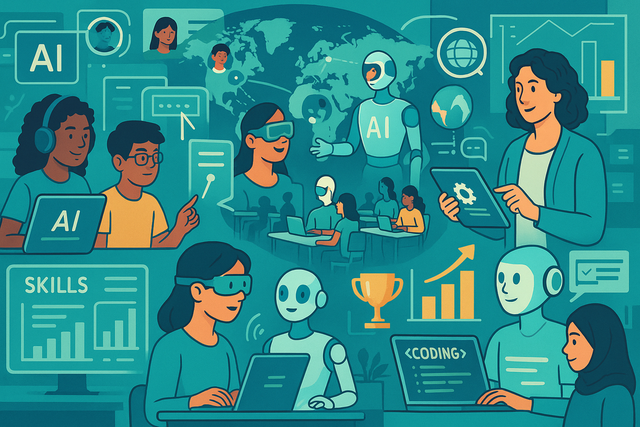
🎓 2025 has witnessed unprecedented transformation in education as artificial intelligence technologies are rapidly integrated into learning environments, curriculum design, and educational administration. The scale of this transformation is reflected in comprehensive global statistics: two-thirds of countries now offer or plan K-12 computer science education, representing a doubling since 2019.
🚀 The Educational AI Revolution
2025 has witnessed unprecedented transformation in education as artificial intelligence technologies are rapidly integrated into learning environments, curriculum design, and educational administration. The scale of this transformation is reflected in comprehensive global statistics: two-thirds of countries now offer or plan K-12 computer science education, representing a doubling since 2019
🌍 Global Educational Infrastructure Expansion
✅ Global Progress: The Stanford AI Index 2025 reveals remarkable progress in educational AI infrastructure and adoption worldwide.
The Stanford AI Index 2025 reveals remarkable progress in educational AI infrastructure and adoption:
🏫 K-12 Computer Science Education
📚 Historic Expansion: Two-thirds of countries now offer or plan K-12 computer science education—doubled from 2019!
Educational systems worldwide are making computer science and AI education a priority:
🌍 Global Coverage
Two-thirds of countries offer or plan K-12 computer science education (doubled from 2019)
👨🏫 Teacher Preparedness
81% of K-12 computer science teachers believe AI should be foundational in curriculum
🏗️ Infrastructure Development
Significant investment in computing infrastructure and teacher training programs
This represents a fundamental shift in educational priorities, recognizing AI literacy as essential for future workforce preparation.
🎓 Higher Education Growth
Universities are experiencing unprecedented demand for AI and computer science education:
- 📊 Degree Enrollment: US bachelor's degrees in computing increased 22% over the last 10 years
- 🎓 Program Expansion: Universities launching new AI-focused degree programs and specializations
- 🔬 Research Investment: Increased funding for AI research programs and facilities
🤖 AI-Powered Learning Platforms and Tools
Educational technology has been revolutionized by AI integration across multiple dimensions:
🎯 Personalized Learning Systems
ℹ️ Personalization Power: AI enables highly personalized learning experiences that adapt to individual student needs in real-time.
AI enables highly personalized learning experiences that adapt to individual student needs:
🗺️ Adaptive Learning Paths
AI systems adjust content difficulty and pacing based on student performance
🧑🏫 Intelligent Tutoring
AI tutors provide 24/7 support for students across various subjects
📊 Learning Analytics
Advanced data analysis to identify learning patterns and optimize educational strategies
📝 Automated Assessment and Grading
AI systems are automating various assessment tasks, enabling educators to focus on high-value activities:
- ✍️ Automated Essay Scoring: AI provides detailed feedback on writing assignments
- 💻 Code Evaluation: AI systems assess programming assignments and provide constructive feedback
- 🎨 Multi-Modal Assessment: AI can evaluate presentations, projects, and creative works
🔷 Google's AI Education Initiatives
📚 Google Skills Learning Platform
✅ Massive Resources: Google introduced a new learning platform offering nearly 3,000 courses and labs to build expertise in AI and other technical areas!
Google introduced a new learning platform offering nearly 3,000 courses and labs to build expertise in AI and other technical areas
🛠️ Hands-on Experience
Practical experience with AI tools and technologies
👨🏫 Expert Learning
Learning opportunities from Google experts
🎓 Credentials
Certifications for completed programs
⚙️ Practical Skills
Focus on practical AI application skills
🎓 AI Pro for Education
Google has expanded AI capabilities specifically for educational institutions, providing:
- Enhanced AI assistance for educators
- Specialized tools for research and analysis
- Integration with educational workflows
- Support for academic integrity and proper AI use
⚠️ Challenges in AI Education Implementation
👨🏫 Teacher Training and Preparation
⚠️ Preparedness Gap: While 81% of teachers support AI in curriculum, many feel unprepared to teach AI concepts—highlighting the need for comprehensive professional development.
While 81% of teachers support AI in curriculum, many feel unprepared to teach AI concepts:
- 🎓 Professional Development: Need for comprehensive teacher training programs
- 🛠️ Resource Requirements: Investment in computing infrastructure and tools
- 📚 Curriculum Development: Creating age-appropriate AI education content
🌐 Digital Divide and Access Equity
AI education expansion reveals significant equity concerns:
🏗️ Infrastructure Gaps
Unequal access to computing resources across regions
💰 Socioeconomic Barriers
Cost of devices and internet access limiting participation
🌍 Rural-Urban Divides
Different levels of technology access between urban and rural areas
🔬 AI in Higher Education and Research
Universities are transforming their operations and research through AI:
⚡ Research Acceleration
AI is accelerating academic research across disciplines:
- 📚 Literature Review: AI systems help researchers analyze vast amounts of academic literature
- 📊 Data Analysis: Advanced analytics for research data processing and interpretation
- 🤝 Collaboration Tools: AI-powered platforms facilitate international research collaboration
🏢 Administrative Optimization
Universities are using AI to improve operational efficiency:
- 🤖 Student Services: AI chatbots providing 24/7 support for student inquiries
- 📋 Admissions Processing: Automated review of applications and support for decision-making
- 🗓️ Resource Management: Optimizing classroom scheduling and resource allocation
⚖️ AI Ethics and Responsible Use in Education
Educational institutions are developing frameworks for responsible AI use:
📝 Academic Integrity
ℹ️ Integrity Frameworks: Schools and universities are developing comprehensive approaches to address AI's impact on academic honesty.
Schools and universities are addressing AI's impact on academic honesty:
🔍 Plagiarism Detection
Advanced tools to identify AI-generated content
📝 Assignment Design
Creating assessments that appropriately leverage AI tools
📋 Student Guidelines
Clear policies on acceptable AI use in academic work
🔒 Privacy and Data Protection
Educational AI systems must protect student privacy:
- 📊 Data Minimization: Collecting only necessary information for educational purposes
- ✅ Consent Frameworks: Ensuring students and parents understand AI system usage
- 🛡️ Security Measures: Protecting student data from unauthorized access or misuse
🤝 Industry-Academia Partnerships
📚 Curriculum Development
Industry experts contribute to educational content development:
🌍 Real-World Relevance
Ensuring curriculum reflects current industry needs and practices
🛠️ Technical Expertise
Providing access to cutting-edge tools and technologies
💼 Career Guidance
Helping students understand AI career opportunities and requirements
💼 Internship and Job Programs
Companies are creating pathways from education to employment:
- ☀️ Summer Programs: Internships and apprenticeships for students
- 🎯 Hiring Initiatives: Recruitment programs targeting recent graduates
- 📈 Continuing Education: Professional development programs for working professionals
🌍 Global Variations in AI Education
🇺🇸 United States
22% growth in CS degrees, K-12 investment, industry partnerships, digital divide concerns
🇨🇳 China
Massive government investment, AI integration at all levels, focus on producing AI talent
🇪🇺 Europe
Emphasis on AI ethics, cross-border collaboration, strong digital literacy focus, privacy-first approaches
🔮 The Future of AI in Education
🎮 Immersive Learning Experiences
🌟 Next Generation: AI will enable more engaging and effective learning experiences through VR integration, simulations, and adaptive content.
AI will enable more engaging and effective learning experiences:
🥽 Virtual Reality Integration
AI-powered VR experiences for complex subject matter
🎯 Simulation Environments
Safe spaces for practicing real-world skills and decision-making
📊 Adaptive Content
Real-time adjustment of learning materials based on student progress
📚 Lifelong Learning Support
AI systems will support continuous learning throughout people's lives:
- 🔍 Skill Gap Analysis: Identifying needed skills for career advancement
- 🗺️ Personalized Learning Paths: Tailored education programs for different life stages and goals
- ⚡ Micro-Learning Platforms: Bite-sized learning opportunities integrated into daily workflows
💼 Economic Impact of AI Education
🏢 Workforce Development
✅ Future Ready: AI education is crucial for preparing the workforce of the future with essential skills for an AI-integrated economy.
AI education is crucial for preparing the workforce of the future:
- 🎯 Skill Requirements: Understanding of AI capabilities and limitations
- 🔄 Adaptability Training: Preparing workers for AI-integrated work environments
- 💡 Innovation Capability: Developing skills for creating new AI applications and solutions
🌍 Economic Competitiveness
Nations are competing to develop AI-educated populations:
- 📋 National AI Strategies: Education as a key component of competitive advantage
- 🎓 Talent Attraction: Creating environments that attract and retain AI talent
- 🚀 Innovation Ecosystems: Combining education, research, and commercial development
📋 Strategic Recommendations
ℹ️ Action Items: Comprehensive recommendations for educational institutions and policymakers to maximize AI education impact.
For Educational Institutions:
- 🎓 Invest in Teacher Training: Comprehensive professional development programs for AI integration
- 📋 Develop Responsible Use Policies: Clear guidelines for appropriate AI use in educational settings
- 🤝 Foster Industry Partnerships: Collaborate with technology companies for curriculum relevance
- ⚖️ Address Equity Issues: Ensure all students have access to AI education opportunities
For Policymakers:
- 🏗️ Support Infrastructure Development: Invest in computing resources and internet connectivity
- 📊 Create National AI Education Strategies: Comprehensive approaches to AI literacy development
- 🌐 Address Digital Divide: Programs to ensure equitable access to AI education
- 🔬 Fund Research on AI in Education: Support evidence-based development of educational AI tools
🎯 Conclusion: Preparing for an AI-Integrated Future
✅ Transformational Impact: The transformation of education through AI represents one of the most significant developments of 2025, with AI literacy becoming as fundamental as traditional literacy and numeracy.
The transformation of education through AI represents one of the most significant developments of 2025. The rapid expansion of AI education programs worldwide reflects recognition that AI literacy is becoming as fundamental as traditional literacy and numeracy.
While challenges remain—particularly around teacher preparation, access equity, and responsible use—the momentum toward AI-integrated education is undeniable. The next generation of students will grow up with AI as a natural part of their educational experience, potentially leading to unprecedented levels of technological fluency and innovation capability.
As AI continues to evolve, education systems must remain adaptive and forward-thinking, preparing students not just to use AI tools, but to understand, evaluate, and potentially improve these systems. The investment in AI education today will determine whether societies can harness AI's benefits while mitigating its risks in the decades to come.