AI in Transportation: Autonomous Vehicles and Smart Mobility Transform the Road
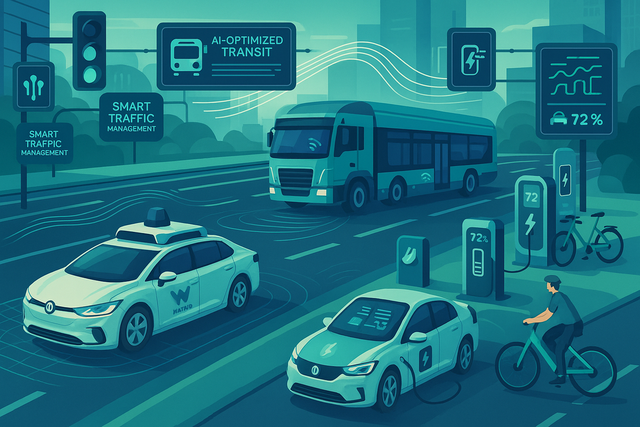
🚗 2025 has marked a pivotal year: AI-powered transportation is transitioning from experimental technology to practical deployment. Autonomous vehicles, intelligent traffic systems, and smart mobility are revolutionizing how people and goods move—making transportation safer, more efficient, and more accessible.
🤖 Autonomous Vehicle Deployment
Waymo Commercial Success: Providing 150,000+ autonomous rides weekly demonstrating operational scale, passenger acceptance, safety performance advantages over human drivers, and successful urban integration.
🌍 Global Expansion
Baidu Apollo Go robotaxi fleets in Chinese cities, European autonomous bus/shuttle pilots, Japanese demographic-specific deployments.
🚛 Freight Autonomy
Self-driving trucks for long-haul highway driving, last-mile autonomous delivery, platoon technology for efficiency/safety.
⚡ EV Integration
Smart charging with grid coordination, station optimization, battery management, range prediction, energy optimization.
🚦 Smart Traffic Management
⏱️ Real-Time Optimization
Adaptive signal control, congestion prediction/prevention, multi-modal coordination, emergency vehicle priority.
🗺️ Google Maps AI
Gemini-powered hands-free assistance, landmark-based navigation, contextual information, adaptive routing with preferences.
🚌 Public Transit
Dynamic scheduling, route optimization, predictive maintenance, capacity management, accessibility enhancement.
🛡️ Safety & Accident Prevention
AI Safety Systems: Pedestrian detection, vehicle-to-vehicle communication, hazard recognition, driver fatigue/distraction monitoring, and health monitoring preventing accidents and saving lives.
📡 V2X Communication
Infrastructure/traffic signal coordination, vehicle driving strategy coordination, pedestrian/cyclist interaction.
🛣️ Smart Infrastructure
Real-time road condition monitoring, adaptive speed limits, weather-responsive systems.
🏙️ Urban Mobility & Smart Cities
🔄 Multi-Modal Integration
Seamless transportation mode transfers, integrated ticketing/payment, real-time cross-platform updates.
📱 Mobility-as-a-Service
On-demand transportation coordination, shared mobility optimization, personalized transportation planning.
🌱 Sustainability
Route optimization reducing fuel consumption, improved traffic flow, EV promotion, energy efficiency, emissions reduction.
⚠️ Challenges & Future Trends
Challenges: Handling edge cases and weather conditions, navigating complex urban environments, job displacement concerns, infrastructure investment costs, digital divide equity, regulatory frameworks needed.
🔮 Emerging Technologies
AI-enabled flying vehicles for urban mobility, hyperloop high-speed systems, autonomous space transportation.
🎯 System Integration
Complete seamless mobility integration, personalized AI solutions, resilient adaptive systems.
Intelligent Transportation Future: AI represents one of the most significant mobility changes since the automobile's invention. Autonomous deployment, intelligent traffic management, and smart infrastructure create systems that are safer, more efficient, and more accessible—transforming how people and goods move into a new era of connected, adaptable mobility benefiting all society.
Real-Time Traffic Optimization
AI-powered traffic management systems are creating more efficient urban mobility:
- Adaptive Signal Control: AI adjusting traffic light timing based on real-time conditions
- Congestion Prediction: AI predicting and preventing traffic congestion before it occurs
- Multi-Modal Coordination: AI coordinating between different transportation modes
- Emergency Vehicle Priority: AI optimizing traffic flow for emergency vehicles
Google Maps AI Integration
Google has enhanced Maps with Gemini AI for superior navigation capabilities
- Hands-Free Assistance: AI providing help with multi-step navigation tasks
- Landmark-Based Navigation: Using recognizable landmarks for easier wayfinding
- Contextual Information: AI providing relevant information about destinations and routes
- Adaptive Routing: AI optimizing routes based on real-time conditions and user preferences
AI in Public Transportation
Public transportation systems are leveraging AI to improve service and accessibility:
Intelligent Fleet Management
AI is optimizing public transportation operations:
- Dynamic Scheduling: AI adjusting bus and train schedules based on demand patterns
- Route Optimization: AI optimizing public transportation routes for maximum efficiency
- Maintenance Prediction: AI predicting vehicle maintenance needs to prevent breakdowns
- Capacity Management: AI ensuring optimal vehicle utilization and passenger comfort
Accessibility Enhancement
AI is making public transportation more accessible:
- Real-Time Information: AI providing accurate, real-time transportation information
- Voice Assistance: AI-powered voice systems for visually impaired passengers
- Route Planning: AI creating accessible route plans for passengers with disabilities
Freight and Logistics Transformation
AI is revolutionizing freight transportation and logistics:
Autonomous Freight Vehicles
Self-driving trucks and delivery vehicles are entering commercial operation:
- Highway Autonomy: AI systems capable of autonomous highway driving for long-haul freight
- Last-Mile Delivery: Autonomous vehicles handling the final delivery stage
- Platoon Technology: AI coordinating groups of trucks for fuel efficiency and safety
Supply Chain Optimization
AI is optimizing freight logistics:
- Load Optimization: AI maximizing cargo capacity and distribution
- Route Planning: AI optimizing delivery routes for efficiency and cost
- Predictive Analytics: AI predicting delivery times and potential delays
Electric Vehicle and Charging Infrastructure
AI is supporting the transition to electric transportation:
Smart Charging Management
AI is optimizing electric vehicle charging:
- Demand Response: AI coordinating charging with electrical grid conditions
- Station Optimization: AI optimizing the placement and operation of charging stations
- Battery Management: AI optimizing battery performance and longevity
Range and Navigation
AI is improving electric vehicle usability:
- Range Prediction: AI accurately predicting electric vehicle range based on conditions
- Charging Station Locating: AI finding optimal charging stations along routes
- Energy Management: AI optimizing energy usage for maximum efficiency
Safety and Accident Prevention
AI is making transportation safer through advanced safety systems:
Collision Avoidance
AI-powered safety systems are preventing accidents:
- Pedestrian Detection: AI systems detecting and avoiding pedestrians
- Vehicle-to-Vehicle Communication: AI coordinating safety between multiple vehicles
- Hazard Recognition: AI identifying road hazards and adjusting driving accordingly
Driver Monitoring
AI is monitoring driver behavior and state:
- Fatigue Detection: AI detecting driver fatigue and providing alerts
- Distraction Monitoring: AI identifying distracted driving and encouraging focus
- Health Monitoring: AI monitoring driver health for medical emergencies
Urban Mobility and Smart Cities
AI is enabling more intelligent urban mobility systems:
Multi-Modal Transportation
AI is integrating different transportation modes:
- Seamless Transfers: AI coordinating between different transportation modes
- Integrated Ticketing: AI systems providing unified payment and access across modes
- Real-Time Updates: AI providing real-time information across all transportation options
Mobility-as-a-Service (MaaS)
AI is enabling comprehensive mobility services:
- On-Demand Services: AI coordinating on-demand transportation services
- Shared Mobility: AI optimizing shared vehicle and bike services
- Personalized Mobility: AI creating personalized transportation plans
Infrastructure and Connectivity
AI is driving improvements in transportation infrastructure:
Vehicle-to-Everything (V2X) Communication
AI is enhancing vehicle communication capabilities:
- Infrastructure Communication: AI coordinating with traffic signals and road sensors
- Vehicle Coordination: AI enabling vehicles to coordinate driving strategies
- Pedestrian Interaction: AI enabling communication with pedestrians and cyclists
Smart Road Infrastructure
AI is powering intelligent road infrastructure:
- Dynamic Road Conditions: AI monitoring and reporting road conditions in real-time
- Adaptive Speed Limits: AI adjusting speed limits based on conditions
- Weather Response: AI adapting to weather conditions for safety
Environmental Impact and Sustainability
AI is supporting more sustainable transportation:
Emissions Reduction
AI is helping reduce transportation emissions:
- Route Optimization: AI reducing fuel consumption through optimal routing
- Traffic Flow Improvement: AI reducing idling and unnecessary stops
- Electric Vehicle Promotion: AI encouraging electric vehicle adoption
Energy Efficiency
AI is improving energy efficiency in transportation:
- Predictive Maintenance: AI ensuring vehicles operate at peak efficiency
- Energy Recovery: AI optimizing regenerative braking and energy recovery
Regulatory and Policy Considerations
The deployment of AI in transportation requires regulatory frameworks:
Safety Standards
Regulators are developing safety standards for AI in transportation:
- Autonomous Vehicle Testing: Frameworks for testing and certifying autonomous vehicles
- Safety Metrics: Standards for measuring AI system safety performance
- Data Requirements: Regulations for data collection and sharing in AI systems
Liability and Insurance
New liability frameworks are being developed:
- Accident Liability: Determining responsibility in AI-involved accidents
- Insurance Models: Adapting insurance models for AI-powered vehicles
Challenges and Limitations
Despite significant progress, several challenges remain:
Technical Challenges
AI in transportation faces technical limitations:
- Edge Cases: Handling unusual or unexpected situations
- Weather Conditions: Operating effectively in various weather conditions
- Complex Urban Environments: Navigating complex urban traffic patterns
Social and Economic Challenges
Broader challenges include:
- Job Displacement: Impact on professional drivers and transportation workers
- Infrastructure Investment: Cost of upgrading infrastructure for AI systems
- Digital Divide: Ensuring equitable access to AI-enhanced transportation
Future Trends in AI Transportation
Emerging Technologies
Future developments will include:
- Flying Vehicles: AI enabling autonomous flying vehicles for urban mobility
- Hyperloop Technology: AI optimizing high-speed ground transportation systems
- Space Transportation: AI supporting autonomous space transportation
System Integration
Future transportation will feature greater integration:
- Seamless Mobility: Complete integration of all transportation modes
- Personalized Transportation: AI providing personalized mobility solutions
- Resilient Systems: Transportation systems that adapt to disruptions
Strategic Recommendations
For Governments
Policymakers should consider:
- Develop Regulatory Frameworks: Create comprehensive regulations for AI in transportation
- Invest in Infrastructure: Upgrade infrastructure to support AI-enhanced transportation
- Support Innovation: Foster innovation while ensuring safety and accessibility
For Industry
Transportation companies should:
- Invest in AI Capabilities: Build AI expertise and infrastructure
- Focus on Safety: Prioritize safety in AI system development
- Engage with Regulators: Work with government on regulatory frameworks
For Society
Communities should:
- Prepare for Change: Adapt to changes in transportation patterns and jobs
- Advocate for Equitable Access: Ensure AI transportation benefits everyone
Conclusion: The Future of Intelligent Transportation
The transformation of transportation through AI in 2025 represents one of the most significant changes in human mobility since the invention of the automobile. AI is not just making existing transportation safer and more efficient—it's creating entirely new possibilities for how people and goods move.
The success of autonomous vehicle deployment, particularly Waymo's commercial service, demonstrates that AI-powered transportation is transitioning from research to practical reality. The combination of autonomous vehicles, intelligent traffic management, and smart infrastructure is creating transportation systems that are safer, more efficient, and more accessible than ever before.
However, realizing the full potential of AI in transportation requires addressing technical challenges, social concerns, and regulatory questions. The most successful implementations will be those that prioritize safety, accessibility, and sustainability while embracing the transformative potential of AI technology.
As we look to the future, AI will continue to revolutionize transportation, enabling new forms of mobility that were previously impossible. The transportation system of the future will be intelligent, connected, and adaptable—creating a new era of mobility that benefits all of society.