AI Careers
How to Start a Career in AI in Pakistan: A Practical Roadmap
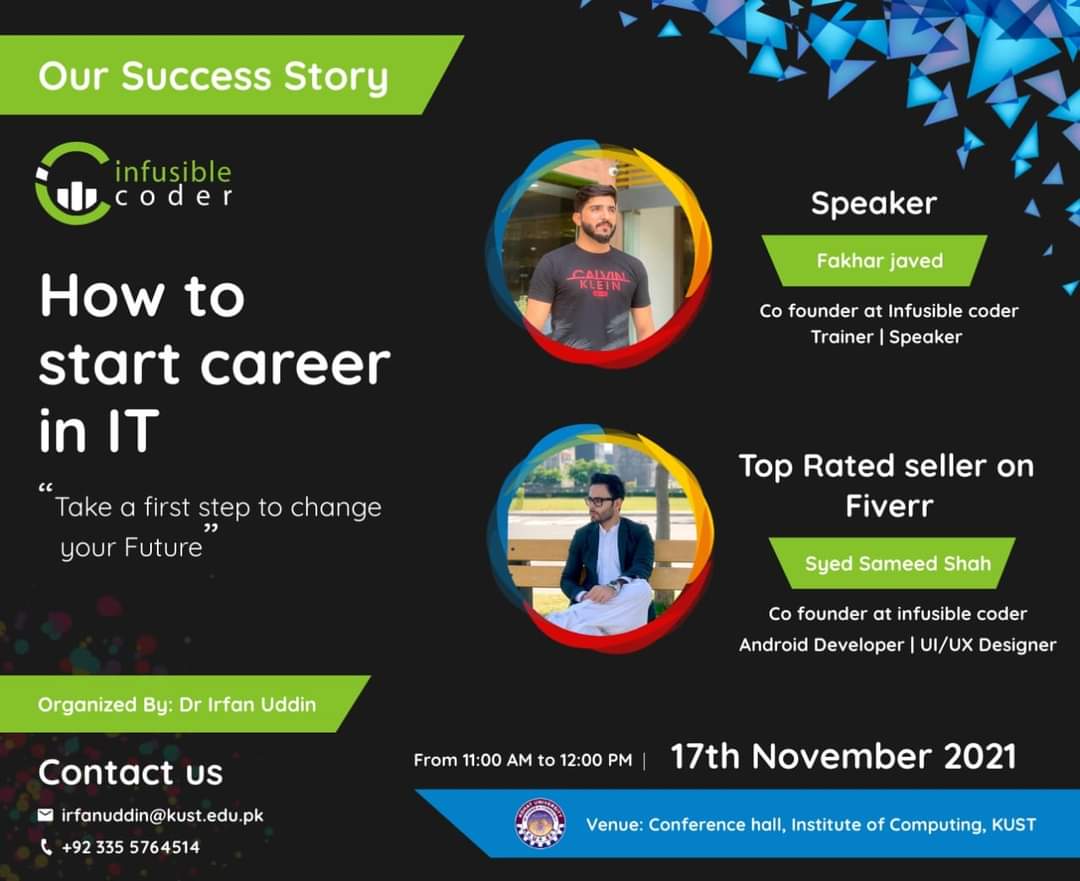
Most AI roadmaps you find online are written for someone with a Western salary, a research budget and a mentor down the hall. This one is written for the reality we see every week in our training center: a student in Kohat, Peshawar or Islamabad, a mid-range laptop, patchy electricity, and a genuine desire to build something that works.
We have taught AI and software courses to hundreds of students, and we also build AI systems for paying clients. That gives us an uncomfortable but useful perspective: we know exactly which skills clients pay for, and which ones only look good on a certificate.
First, decide which AI job you actually want
"AI" is not one job. Confusing these four paths is the single biggest reason people spend a year studying and end up unemployable.
- AI application developer. You build products that use existing models — chatbots, document assistants, recommendation features, automated workflows. This is where roughly 80% of the paid work in Pakistan sits today, and it is the fastest path to income.
- Machine learning engineer. You train, fine-tune and deploy models, own the data pipeline, and care about latency and cost. Requires stronger Python and systems skills.
- Data scientist / analyst. You answer business questions with data. Heavier on statistics and communication, lighter on deployment.
- AI researcher. You publish. Requires a strong mathematics background and usually a graduate degree. Very few positions exist in Pakistan.
If you need to earn within a year, start as an AI application developer. You can always move deeper later — the reverse is much harder because you never build a portfolio.
The first three months: fundamentals you cannot skip
Resist the urge to jump straight to fine-tuning a large language model. The students who progress fastest are the ones who can already write clean code and reason about data.
Month 1 — Python, properly
Not "Python for AI" — just Python. Functions, data structures, list and dictionary comprehensions, file handling, virtual environments, reading error messages calmly. Write at least 20 small programs by hand. If you cannot write a script that reads a messy CSV file and produces a clean summary, you are not ready for the next step.
Month 2 — Data handling and the command line
Learn pandas and NumPy, plus enough Git to work in a team and enough Linux command line to survive on a server. Take a real, dirty dataset — Pakistani property listings, cricket statistics, local weather data — and spend a week cleaning it. Real data is never as tidy as tutorial data, and employers can tell within two questions whether you have handled the real thing.
Month 3 — How machine learning actually works
Now learn the concepts: training and test splits, overfitting, features and labels, classification versus regression, and how to read an evaluation metric honestly. You need intuition and vocabulary here, not deep mathematics. Build three small projects end to end: a spam classifier, a price predictor, and a simple recommender.
Months four to six: build with real AI models
This is where the market is right now. You do not need to train a model from scratch to be useful — you need to know how to combine an existing model with a real business problem.
- Working with LLM APIs. Prompting, structured outputs, streaming responses, cost control, error handling, and evaluating whether the output is actually correct.
- Retrieval-augmented generation (RAG). Loading a company's own documents into a vector database so the model answers from real facts rather than inventing them. This is the most commonly requested feature we get from clients.
- Agents and automation. Chaining tool calls so the system can do something — send an email, update a sheet, generate a report — instead of only talking.
- Deployment. A model that only runs in your notebook has zero commercial value. Learn to wrap it in an API and put it online.
We cover this progression in detail in our Data Science & AI course, and the web fundamentals it depends on in Full Stack Web Development.
The portfolio that actually gets replies
Three finished, deployed projects beat fifteen half-finished notebooks. For each project, write a short page that explains the problem, your approach, what broke, and what you would do differently. That last section is what convinces an experienced interviewer that you did the work yourself.
Project ideas that consistently impress local clients:
- A WhatsApp or web chatbot that answers questions from a shop's own product catalogue.
- An Urdu–English document summariser for a college or NGO.
- An invoice-reading tool that extracts totals from photographed receipts.
- A dashboard that forecasts demand for a small retailer using their past sales.
Notice that each one solves a problem someone in your own city actually has. That is not a coincidence — it is also how you get your first paying customer.
What the money looks like in Pakistan
Being honest about numbers saves people from disappointment. In our experience across 2024–2026 hiring and freelance work:
- First freelance AI automation projects for local businesses: PKR 25,000–80,000 per project.
- Junior AI/software developer at a Pakistani software house: roughly PKR 60,000–120,000 per month, depending on city and skill.
- Remote contract work for international clients: USD 15–35 per hour once you have a credible portfolio and can communicate clearly in English.
The gap between the first and third line is mostly communication and reliability, not technical genius.
Who this field is open to
We want to be direct about something, because we are asked constantly: our courses and our software house are open to men and women, boys and girls, alike. Female students study with us on-site in Kohat and in live online batches, and several now work as developers and designers. Talent is not distributed by gender, and neither are our seats.
A realistic weekly schedule
Consistency beats intensity. A student who studies 10 focused hours per week for six months will outperform one who does 40 hours for three weeks and then stops.
- Four sessions of two hours on weekdays: new material plus practice.
- One longer weekend session: project work only, no tutorials.
- Thirty minutes weekly: write down what you learned and what confused you.
Getting help when you are stuck
The main reason self-taught students quit is not difficulty — it is isolation. Getting unstuck alone can take three days; a good teacher unsticks you in ten minutes. If you are in or near Kohat, our on-site batches run Saturday to Thursday; if you are elsewhere in Pakistan, our live online batches cover the same syllabus. You can see the full list on our courses page or contact us to discuss which track fits your background.
Frequently asked questions
Do I need a computer science degree to work in AI?
No. A degree helps for research roles and for some visa or corporate HR filters, but for applied AI work — building products on top of models — a portfolio of working projects matters more. Several of our students came from BBA, electrical engineering and even pure arts backgrounds.
What laptop do I need to learn AI?
Any machine with 8 GB of RAM and a stable internet connection is enough to start. Training large models happens on rented cloud GPUs or free tiers like Google Colab, not on your laptop. Do not delay starting because you cannot afford a GPU.
How long before I can earn from AI skills?
Students who study consistently for 10–12 hours a week typically take four to six months to reach their first paid work — usually small automation or chatbot projects for local businesses, or entry-level freelance tasks. Full-time job readiness is realistically 9–12 months.
Are your AI courses open to girls and women?
Yes. Our classes are open to everyone — male and female students study with us, both on-site in Kohat and in live online batches. Female students who prefer online-only attendance can complete the entire course remotely.