AI Transformation in Manufacturing: From Smart Factories to Autonomous Production
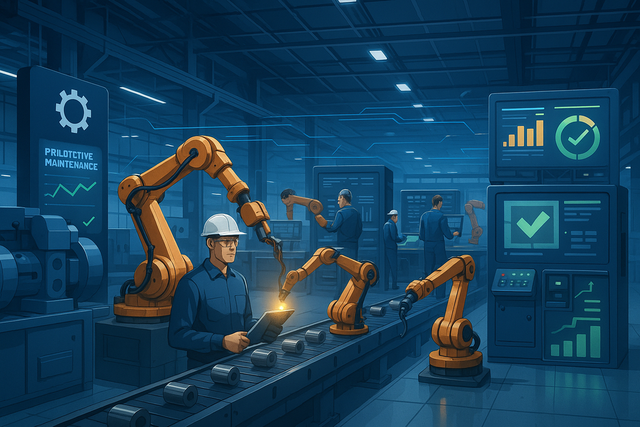
🏭 2025 has marked a watershed moment: traditional factories are evolving into intelligent, self-optimizing production systems. AI integration across design, planning, production, and maintenance is creating efficient, flexible, and responsive manufacturing ecosystems that redefine industrial capabilities.
🏗️ Smart Factory Implementation
The New Industrial Paradigm: AI-driven smart factories transform traditional production with real-time optimization, dynamic scheduling, resource allocation, quality prediction, and efficiency monitoring creating self-managing production environments.
⚙️ Production Optimization
Dynamic scheduling based on demand/supply/equipment, optimizing materials/energy/human resources, predicting quality issues proactively.
🔗 System Integration
Supply chain intelligence coordinating production, inventory optimization, demand forecasting for seamless operations.
🔧 Predictive Maintenance
Vibration/temperature/acoustic analysis predicting failures, condition-based monitoring, optimal maintenance scheduling reducing costs.
✅ Quality Control Revolution
👁️ Computer Vision
Real-time defect detection with superhuman accuracy, multi-modal visual/dimensional/functional analysis, consistent quality standards.
📊 Process Control
Pattern recognition in production data, predictive quality control, AI-suggested process adjustments for optimal performance.
🤖 Autonomous Systems
Self-optimizing production lines, adaptive control, error recovery, collaborative robots (cobots) working safely with humans.
📦 Supply Chain Intelligence
📈 Demand Sensing
Market trend analysis, seasonal adjustments, risk assessment preventing supply chain disruptions.
🚚 Logistics Optimization
Route optimization reducing costs/times, warehouse management, distribution network planning.
🏭 Industry-Specific Applications
Sector Transformations: Automotive (assembly optimization, supplier integration, EV production), Pharmaceutical (regulatory compliance, batch consistency, traceability), Electronics (component placement, automated testing, complex supply chains).
🌱 Sustainability Impact
⚡ Energy Optimization
Continuous energy monitoring, peak load management, renewable energy integration coordinating production.
♻️ Waste Reduction
Material optimization minimizing waste, scrap reduction through better control, circular economy transitions.
👥 Human Collaboration
Augmented decision-making with real-time insights, personalized training, knowledge transfer from experienced workers.
⚠️ Challenges & Future Trends
Implementation Considerations: Legacy system integration, data quality requirements, cybersecurity protection, workforce skill adaptation, training investment, and change management for successful AI adoption.
🔮 Emerging Technologies
Digital twins for simulation/optimization, edge AI for faster decisions, autonomous factories with minimal human intervention.
📊 Industry Evolution
Mass customization, distributed manufacturing coordination, servitization transforming manufacturers into service providers.
Manufacturing Transformation: AI represents one of the most significant industrial revolutions since assembly lines. Successful organizations view AI as enhancing human capabilities, creating intelligent, collaborative, and adaptive manufacturing where AI and humans work together more efficiently, sustainably, and innovatively than ever before.
Condition-Based Monitoring
AI systems continuously monitor equipment health using various sensors and data sources:
- Vibration Analysis: AI analyzing equipment vibrations to predict failures before they occur
- Temperature Monitoring: AI monitoring temperature patterns to identify potential issues
- Acoustic Analysis: AI listening to equipment sounds to detect abnormal operating conditions
- Performance Metrics: AI tracking key performance indicators to predict maintenance needs
Maintenance Optimization
AI transforms maintenance strategies from reactive to predictive:
- Scheduled Maintenance: AI determining optimal maintenance schedules based on equipment condition and production needs
- Parts Management: AI predicting parts failures and optimizing inventory of replacement components
- Maintenance Cost Reduction: AI reducing maintenance costs by preventing catastrophic failures
Quality Control and Assurance Revolution
AI is transforming quality control through advanced inspection and analysis capabilities:
Computer Vision Inspection
AI-powered computer vision systems are revolutionizing quality control:
- Real-Time Defect Detection: AI detecting product defects during production with superhuman accuracy
- Multi-Modal Analysis: AI combining visual, dimensional, and functional testing in single systems
- Consistent Quality Standards: AI maintaining consistent quality standards across production runs and time periods
Statistical Process Control
AI enhances traditional statistical process control methods:
- Pattern Recognition: AI identifying subtle patterns in production data that indicate quality issues
- Predictive Quality Control: AI predicting quality issues before they manifest in finished products
- Process Optimization: AI suggesting process adjustments to maintain optimal quality levels
Autonomous Production Systems
AI is enabling increasing levels of autonomy in manufacturing systems:
Self-Optimizing Production Lines
Production lines are becoming increasingly self-managing:
- Adaptive Control Systems: AI adjusting production parameters automatically to maintain quality and efficiency
- Error Recovery: AI systems that can identify and correct errors without human intervention
- Continuous Improvement: AI systems that learn and improve performance over time
Collaborative Robotics (Cobots)
AI-enhanced robots are working alongside human workers:
- Adaptive Motion: AI enabling robots to adapt their movements based on changing production requirements
- Safety Enhancement: AI ensuring safe collaboration between humans and robots
- Skill Sharing: AI enabling robots to learn from human workers and vice versa
Supply Chain Intelligence and Logistics
AI is transforming supply chain management in manufacturing:
Demand Sensing and Planning
AI systems are improving demand prediction and supply planning:
- Market Trend Analysis: AI analyzing market signals to predict future demand patterns
- Seasonal Adjustment: AI accounting for seasonal and cyclical demand variations
- Risk Assessment: AI identifying and mitigating supply chain risks before they impact production
Logistics Optimization
AI is optimizing the flow of materials and products:
- Route Optimization: AI optimizing transportation routes to reduce costs and delivery times
- Warehouse Management: AI optimizing warehouse operations and inventory placement
- Distribution Planning: AI optimizing distribution networks and delivery schedules
Industry-Specific Applications
Automotive Manufacturing
The automotive industry is leading AI adoption in manufacturing:
- Assembly Line Optimization: AI optimizing automotive assembly lines for efficiency and quality
- Supplier Integration: AI coordinating with automotive suppliers to ensure just-in-time delivery
- Electric Vehicle Production: AI optimizing production of new electric vehicle technologies
Pharmaceutical Manufacturing
Pharmaceutical manufacturing benefits from AI in highly regulated environments:
- Regulatory Compliance: AI ensuring compliance with strict pharmaceutical manufacturing regulations
- Batch Consistency: AI maintaining consistency across pharmaceutical batches
- Traceability: AI providing complete traceability throughout the manufacturing process
Electronics Manufacturing
Electronics manufacturing leverages AI for precision and quality:
- Component Placement: AI optimizing the placement of electronic components on circuit boards
- Testing and Validation: AI automating testing and validation of electronic products
- Supply Chain Coordination: AI managing complex supply chains for electronic components
Data and Analytics Transformation
AI is revolutionizing how manufacturing data is collected, analyzed, and used:
Industrial Internet of Things (IIoT)
AI enhances the value of IIoT data:
- Sensor Data Fusion: AI combining data from multiple sensors to provide comprehensive insights
- Predictive Analytics: AI using historical data to predict future manufacturing outcomes
- Real-Time Decision Making: AI enabling real-time decision making based on sensor data
Manufacturing Analytics
Advanced analytics transform manufacturing operations:
- Performance Dashboards: AI creating comprehensive dashboards of manufacturing performance
- Benchmarking: AI comparing manufacturing performance across different facilities and time periods
- Root Cause Analysis: AI identifying the underlying causes of manufacturing issues
Human-Machine Collaboration
AI is enhancing human capabilities in manufacturing rather than replacing human workers:
Augmented Decision Making
AI provides human workers with enhanced decision-making capabilities:
- Real-Time Insights: AI providing workers with real-time insights into production conditions
- Predictive Alerts: AI alerting workers to potential issues before they become problems
- Optimization Recommendations: AI suggesting process improvements to workers
Skill Enhancement and Training
AI is transforming how manufacturing workers develop and apply skills:
- Personalized Training: AI providing personalized training programs for individual workers
- Skill Assessment: AI assessing worker skills and identifying areas for improvement
- Knowledge Transfer: AI capturing and transferring knowledge from experienced workers to new employees
Environmental and Sustainability Impact
AI is helping manufacturing become more sustainable and environmentally responsible:
Energy Optimization
AI systems optimize energy consumption in manufacturing:
- Energy Monitoring: AI continuously monitoring energy consumption across manufacturing processes
- Peak Load Management: AI optimizing energy usage to reduce peak demand charges
- Renewable Integration: AI coordinating manufacturing with renewable energy availability
Waste Reduction
AI helps reduce waste and improve resource efficiency:
- Material Optimization: AI optimizing material usage to minimize waste
- Scrap Reduction: AI reducing scrap and rework through better process control
- Circular Economy: AI facilitating the transition to circular manufacturing models
Challenges and Implementation Considerations
Technology Integration
Manufacturing organizations face challenges in integrating AI technologies:
- Legacy Systems: Integrating AI with existing manufacturing equipment and systems
- Data Quality: Ensuring high-quality data for AI systems to function effectively
- Cybersecurity: Protecting AI systems and manufacturing data from cyber threats
Workforce Impact
AI implementation affects manufacturing workforces:
- Job Displacement: Managing concerns about job displacement due to automation
- Skill Requirements: Adapting workforce skills for AI-integrated manufacturing
- Training Investment: Providing necessary training for workers to collaborate with AI systems
Future Trends in Manufacturing AI
Emerging Technologies
Future developments in manufacturing AI will include:
- Digital Twins: AI-powered digital replicas of physical manufacturing systems for simulation and optimization
- Edge AI: AI processing at the edge of manufacturing networks for faster decision making
- Autonomous Factories: Fully autonomous manufacturing facilities with minimal human intervention
Industry Evolution
Manufacturing will continue to evolve with AI:
- Mass Customization: AI enabling cost-effective production of customized products
- Distributed Manufacturing: AI coordinating manufacturing across multiple locations
- Servitization: AI transforming manufacturing companies into service providers
Strategic Recommendations for Manufacturing Organizations
Implementation Strategy
Organizations should approach AI implementation strategically:
- Start with High-Impact Areas: Focus AI implementation on areas with the highest potential impact
- Invest in Data Infrastructure: Build robust data collection and management capabilities
- Develop AI Expertise: Build internal AI capabilities through hiring and training
- Plan for Integration: Ensure AI systems integrate smoothly with existing manufacturing processes
Workforce Development
Successful AI implementation requires workforce preparation:
- Skills Assessment: Assess current workforce skills and identify gaps
- Training Programs: Develop comprehensive training programs for AI collaboration
- Change Management: Manage the human side of technological change
Conclusion: The Manufacturing AI Transformation
The transformation of manufacturing through AI in 2025 represents one of the most significant industrial revolutions since the introduction of assembly lines and mass production. AI is not just improving existing manufacturing processes—it's fundamentally changing how manufacturing is conceived and executed.
The most successful manufacturing organizations will be those that view AI not as a replacement for human workers, but as a tool for enhancing human capabilities and creating more efficient, flexible, and responsive production systems. The combination of AI automation and human creativity and problem-solving is creating manufacturing capabilities that were previously impossible.
As AI technology continues to advance, manufacturing will become increasingly intelligent, autonomous, and sustainable. The organizations that embrace this transformation today will be best positioned to compete in the AI-driven manufacturing landscape of tomorrow.
The future of manufacturing is intelligent, collaborative, and adaptive—where AI and human workers work together to create products more efficiently, sustainably, and innovatively than ever before.