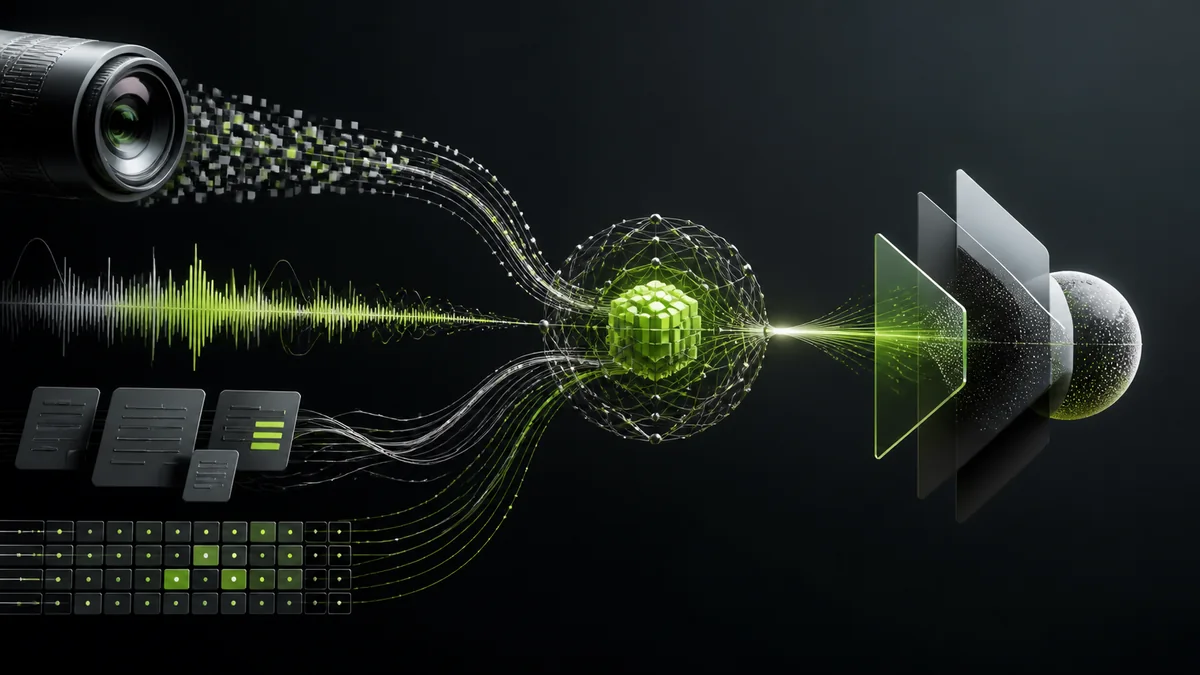
Low-Latency AI Voice Agents: Architecture, WebRTC Streaming, and Telephony Integration
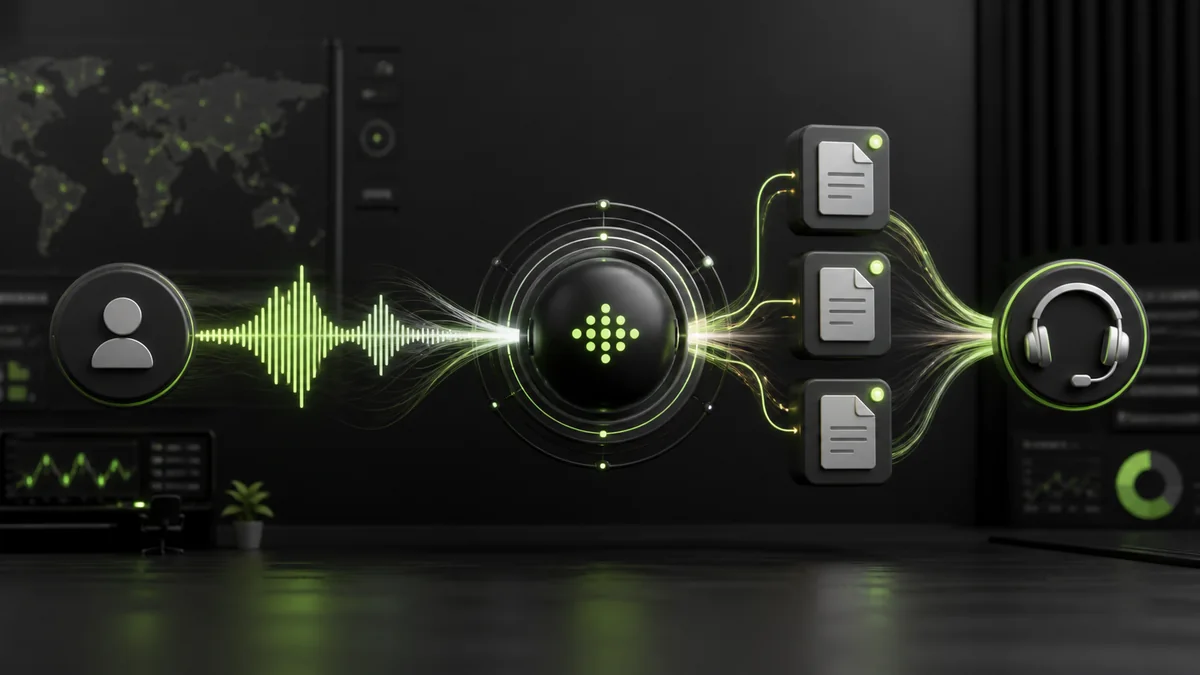
In customer support telephony, traditional Interactive Voice Response (IVR) systems ("Press 1 for Sales, Press 2 for Support") are universally loathed. Modern conversational Voice AI agents replace rigid phone trees with natural, flowing voice dialogue that understands intent, resolves issues, and executes real database transactions.
However, voice is unforgiving: while a chat user comfortably waits 2 seconds for a text response, a 2-second silence on a phone call feels like a dropped connection. In this guide, we break down the engineering required to build sub-500ms conversational voice systems.
The 4-Stage Voice Latency Budget
To achieve a human-like response under 500ms, every stage of the pipeline must operate concurrently:
| Pipeline Stage | Technology Provider | Target Latency |
|---|---|---|
| 1. Voice Activity Detection (VAD) | Silero VAD / WebRTC VAD | ~30ms |
| 2. Streaming Speech-to-Text (STT) | Deepgram Nova-2 / Whisper WebSockets | ~120ms |
| 3. Ultra-Fast LLM Reasoning | Cerebras / Groq / Gemini 2.0 Flash | ~150ms (Time-to-First-Token) |
| 4. Streaming Text-to-Speech (TTS) | Cartesia Sonic / ElevenLabs Turbo v2.5 | ~120ms (Time-to-First-Audio) |
| Total End-to-End Latency | Concurrently Pipelined | ~420ms (Human Natural Cadence) |
The Critical Role of Speculative Execution & Chunking
In a naive pipeline, step 3 waits for step 2 to complete, and step 4 waits for step 3 to finish. In a high-performance voice pipeline, everything streams concurrently:
- As the STT produces an interim transcript, the LLM starts speculative reasoning.
- As the LLM emits its first 4 words ("Certainly, let me check..."), those words are immediately sent to the TTS engine.
- The first audio packet is already playing through the caller's speaker while the LLM is still generating the rest of the sentence.
Handling Interruptions: The "Barge-in" Mechanism
A fatal flaw of early voice bots was their inability to stop talking when interrupted. Implementing robust Barge-in requires real-time audio event coordination:
# Simplified Barge-in Voice Worker Event Loop
async def handle_caller_audio_stream(websocket, tts_player, llm_stream):
    async for audio_chunk in websocket.iter_bytes():
        # Step 1: Detect speech activity in caller audio
        if vad_detector.is_speech(audio_chunk):
            if tts_player.is_actively_speaking():
                # User interrupted! Cancel active playback and LLM stream
                await tts_player.flush_buffer()
                await llm_stream.abort()
                logger.info("Barge-in detected: Aborted active bot audio")

        # Step 2: Feed audio to streaming STT engine
        await stt_engine.push_audio(audio_chunk)
Telephony Integration Architecture
To connect your voice worker to standard phone networks:
- Twilio Voice Webhook: When a customer calls your business phone number, Twilio executes a TwiML response:
<Connect><Stream url="wss://voice.yourdomain.com/ws/call" /></Connect>. - WebSocket Audio Bridge: Your Python server accepts the WebSocket connection, receiving 8kHz/16kHz μ-law audio packets.
- CRM & Tool Access: The agent uses MCP or REST tools to look up the caller's phone number in your database, retrieving active orders and past history automatically.
The ROI of Conversational Voice Automation
For high-volume customer service operations (telecom, e-commerce delivery tracking, clinic scheduling, financial balance inquiries), voice AI agents resolve 60% to 75% of routine Tier-1 calls with zero human hold time, operating 24 hours a day at approximately 1/10th the cost of manual telephone call centers.
Transform Your Customer Experience with Infusible Coder
Ready to deploy AI voice intelligence for your organization? Our software engineers build custom telephony, WebRTC, and AI automation solutions. Learn more about our AI services or contact our engineering team to start building.
Frequently asked questions
What is the acceptable latency budget for conversational voice AI?
Human conversational turn-taking happens within 250ms to 500ms. If total voice bot latency exceeds 700ms, speakers experience awkward pauses and talk over each other. Sub-500ms total pipeline latency is essential for natural dialogue.
How does conversational voice AI handle user interruptions (Barge-in)?
The voice pipeline runs continuous Voice Activity Detection (VAD) on incoming audio. The millisecond the user starts speaking while the bot is talking, the server immediately sends a cancellation signal to flush client audio buffers and abort the active LLM generation stream.
Can voice AI agents integrate directly with phone lines and PBX systems?
Yes. Using telephony gateways like Twilio Media Streams, Vonage, or open-source FreeSWITCH/Asterisk SIP trunks, callers dial standard phone numbers and connect directly to your WebSocket voice worker.
How do voice agents handle regional accents and multilingual switching?
Modern acoustic foundation speech-to-text models (such as Deepgram Nova-2 or Whisper v3) are trained on hundreds of thousands of hours of accented speech (including Pakistani English and Urdu-English code-switching), maintaining high transcription accuracy.
Put this AI approach to work
Infusible Coder designs production AI and software systems for businesses, and teaches practical AI skills through our training programs in Kohat and online.