Building Production Multimodal AI Apps: Integrating Vision, Voice, and Streaming APIs
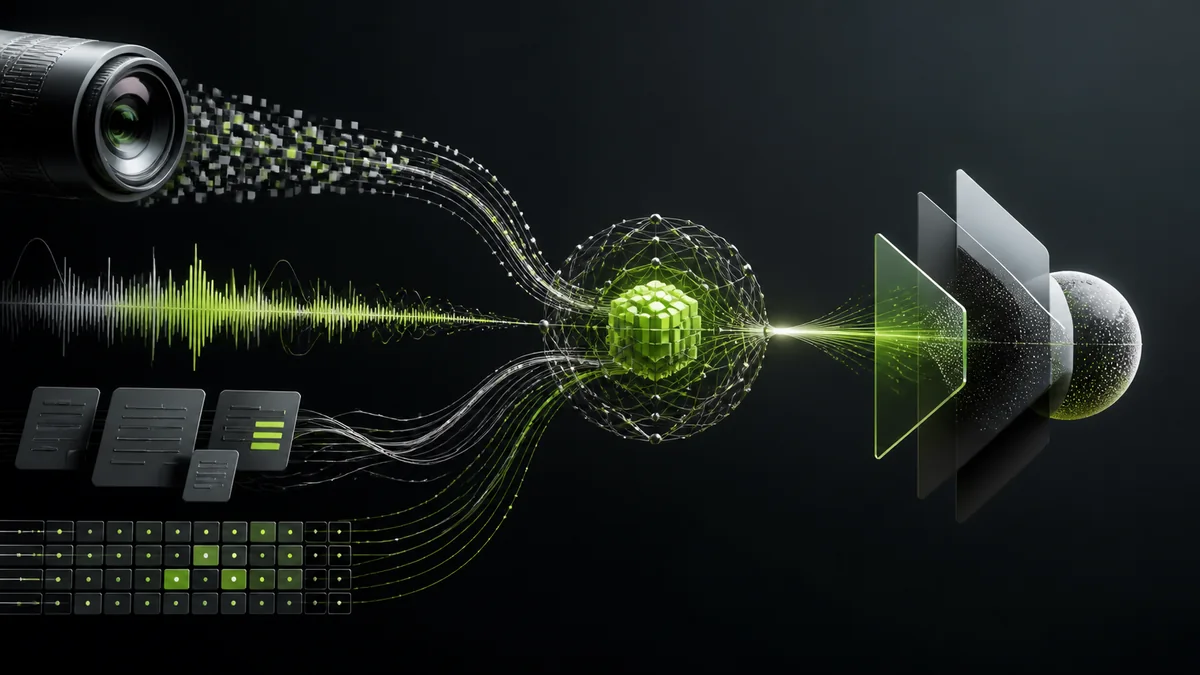
Human communication is naturally multimodal: we speak, gesture, show visual artifacts, and listen concurrently. The emergence of native multimodal foundation models enables software applications to understand visual camera feeds, audio intonations, and complex documents simultaneously.
In this architecture walkthrough, we explore the complete engineering stack for building a production-ready Multimodal AI application using React on the frontend and Python (FastAPI) on the backend.
The Multimodal Technology Stack
- Frontend: React with HTML5 Canvas capture, Web Audio API, and MediaRecorder.
- Transport: Bidirectional WebSockets for real-time binary audio/image frame streaming.
- Backend Gateway: FastAPI with AsyncIO event loops managing worker tasks.
- Multimodal Engine: Vision-capable LLM APIs (GPT-4o, Gemini 2.0 Flash, Claude 3.5 Sonnet) or self-hosted open vision models (Qwen2-VL, Llama 3.2 Vision).
Step 1: Frontend Image Optimization & Base64 Serialization
Transmitting uncompressed 10MB camera snapshots creates massive network latency. Always resize and compress client-side before dispatch:
// Capture and compress image to WebP in browser
async function captureOptimizedFrame(videoElement) {
  const canvas = document.createElement('canvas');
  const maxDimension = 1568;
  let { videoWidth: width, videoHeight: height } = videoElement;

  if (width > maxDimension || height > maxDimension) {
    if (width > height) {
      height = Math.round((height * maxDimension) / width);
      width = maxDimension;
    } else {
      width = Math.round((width * maxDimension) / height);
      height = maxDimension;
    }
  }

  canvas.width = width;
  canvas.height = height;
  const ctx = canvas.getContext('2d');
  ctx.drawImage(videoElement, 0, 0, width, height);

  // Compress to WebP at 0.85 quality
  return canvas.toDataURL('image/webp', 0.85);
}
Step 2: FastAPI Multimodal Backend Processor
The backend receives the image payload and structured query, invoking the multimodal model asynchronously:
# main.py - FastAPI Multimodal Endpoint
from fastapi import FastAPI, HTTPException
from pydantic import BaseModel
from openai import AsyncOpenAI
import os

app = FastAPI(title="Multimodal Inspection Gateway")
client = AsyncOpenAI(api_key=os.getenv("OPENAI_API_KEY"))

class InspectionRequest(BaseModel):
    image_base64: str
    prompt: str

@app.post("/api/inspect-document")
async def inspect_document(payload: InspectionRequest):
    try:
        response = await client.chat.completions.create(
            model="gpt-4o-mini",
            messages=[
                {
                    "role": "user",
                    "content": [
                        {"type": "text", "text": payload.prompt},
                        {
                            "type": "image_url",
                            "image_url": {
                                "url": payload.image_base64,
                                "detail": "high"
                            }
                        }
                    ]
                }
            ],
            response_format={"type": "json_object"},
            max_tokens=1024
        )
        return {"result": response.choices[0].message.content}
    except Exception as e:
        raise HTTPException(status_code=500, detail=str(e))
Latency Optimization Checklist
| Optimization Target | Standard Approach | Optimized Production Approach | Latency Improvement |
|---|---|---|---|
| Image Upload | Raw PNG / JPEG (4–8 MB) | WebP Client Resized (180–350 KB) | ~600ms faster transfer |
| Audio Transport | HTTP POST upload | PCM 16-bit 24kHz WebSocket Stream | ~400ms faster TTFT |
| Response Generation | Wait for full completion | Server-Sent Events (SSE) token streaming | Instant perceived response |
Real-World Enterprise Applications
- Automated Insurance Claims: Policyholders photograph vehicle damage; the multimodal pipeline detects affected panels, verifies part numbers, and estimates repair labor.
- Medical Prescription Verification: Clinic staff scan handwritten doctor prescriptions; the vision model maps medications against standard pharmaceutical inventories to prevent dosage errors.
- Construction Blueprint Auditing: Analyzing architectural drawings to extract room dimensions, electrical outlet counts, and material specifications.
Build Next-Generation Applications with Us
Multimodal interfaces represent the future of computing. Our engineering team at Infusible Coder builds end-to-end web, mobile, and AI solutions tailored to complex business challenges. Explore our AI development services or learn applied AI in our Data Science & AI training course.
Frequently asked questions
What is Native Multimodal AI?
Native Multimodal AI refers to models (like GPT-4o, Google Gemini 2.0, and Claude 3.5 Sonnet) trained end-to-end on text, vision, and audio tokens simultaneously, rather than gluing separate transcription, vision, and text models together with high latency.
How should images be formatted and optimized before sending to vision APIs?
Compress images to WebP or JPEG format, resize dimensions so the maximum edge is around 1568px to 2048px, and strip unnecessary EXIF metadata. This cuts token consumption and network upload time by 70% without sacrificing visual accuracy.
What backend framework is best for streaming multimodal data?
FastAPI with AsyncIO and WebSockets is the industry preferred standard in Python due to its high-throughput async event loops and native support for streaming binary audio/image chunks.
Can multimodal models extract structured data from messy handwritten invoices?
Yes. Vision-capable language models excel at visual document understanding (VDU), effortlessly reading skewed receipts, handwritten signatures, and complex multi-column financial statements.
Put this AI approach to work
Infusible Coder designs production AI and software systems for businesses, and teaches practical AI skills through our training programs in Kohat and online.