Fine-Tuning vs RAG vs Context Caching: The Definitive Enterprise AI Decision Framework

One of the most frequent conversations we have with prospective enterprise clients begins with: "We want to train and fine-tune our own proprietary AI model on our company data." In almost every instance, fine-tuning is the wrong initial step. RAG or context caching is almost always what they actually need.
Choosing the wrong customization strategy leads to bloated development cycles, inaccurate hallucinations, and immense maintenance overhead. This guide provides a battle-tested decision framework to choose the exact right approach.
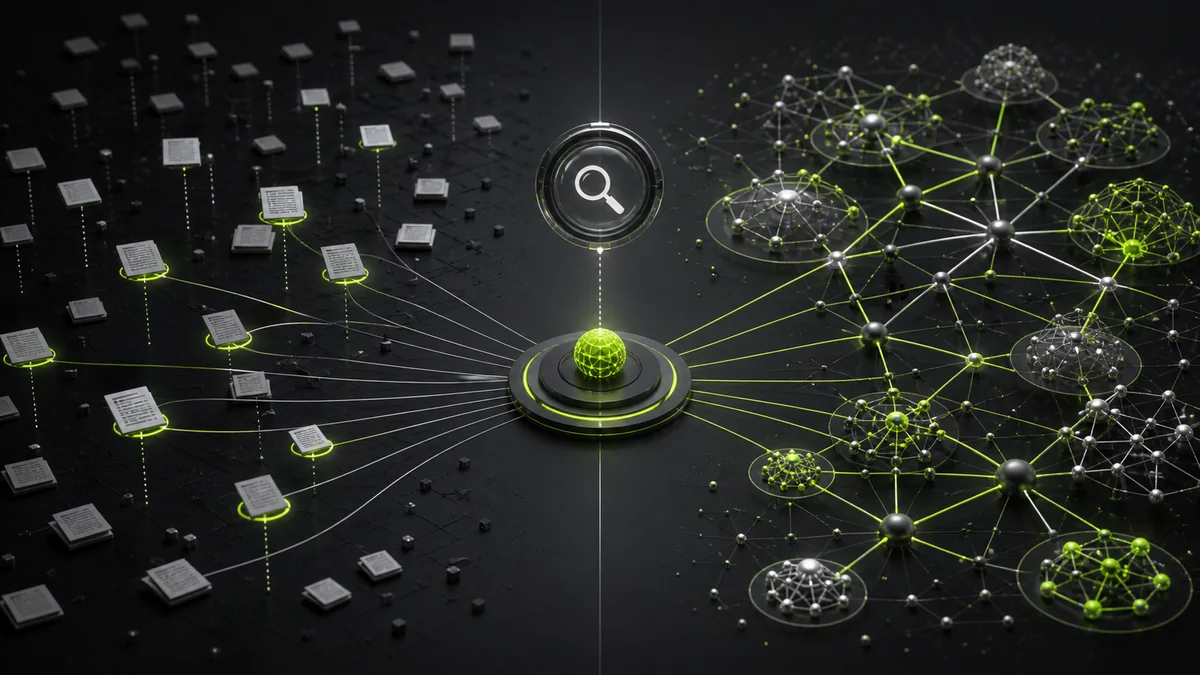
The Core Distinction: Form vs Fact
To understand customization, keep this universal rule in mind:
The Four Pillars of AI Customization
1. Prompt Engineering & Few-Shot In-Context Learning
The fastest and cheapest tier. You supply instructions, system personas, and 3–5 worked input/output examples directly in the prompt. Always start here to establish a baseline before writing a line of training code.
2. Prompt Context Caching
Modern providers (Anthropic Claude, Google Gemini, OpenAI) support caching large static prompt segments (up to 1M+ tokens). If your system references a 200-page operational manual on every call, context caching slashes token costs by up to 90% and reduces time-to-first-token to a fraction of standard calls.
3. Retrieval-Augmented Generation (RAG)
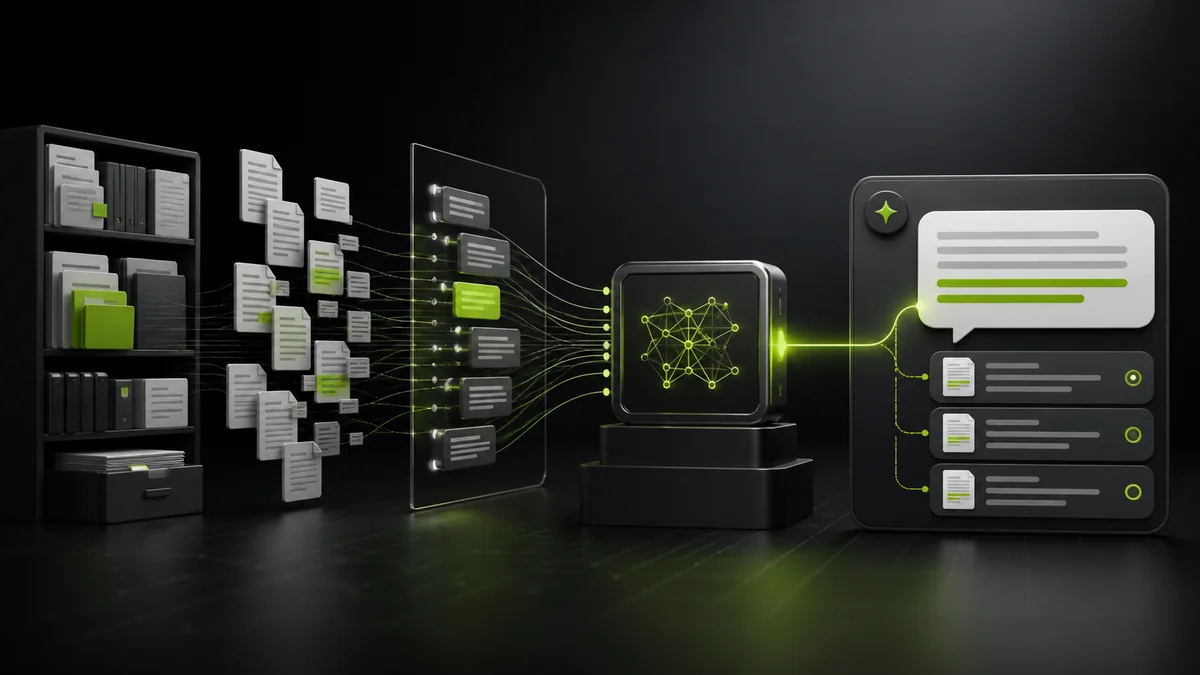
You index your documents in a vector store or Knowledge Graph. When a question arrives, relevant passages are retrieved dynamically and passed in context with explicit citations. Essential when facts change frequently or where citations are mandatory for verification.
4. Parameter-Efficient Fine-Tuning (PEFT / LoRA)
You train adapter weights on thousands of curated domain examples to modify the model's internal representations. Essential when you need a compact 7B model to output domain-specific code or medical shorthand with zero prompt overhead.
The Enterprise Decision Matrix
| Requirement | Prompting | Context Caching | RAG | LoRA Fine-Tuning |
|---|---|---|---|---|
| Data Changes Daily / Weekly | Medium | No | Yes (Instant) | No (Requires Retraining) |
| Verifiable Source Citations | No | No | Yes (Mandatory) | No (Prone to hallucinations) |
| Custom Specialized Output Format | Moderate | Good | Moderate | Optimal (100% adherence) |
| Setup Time & Engineering Effort | Hours | Hours | Days / Weeks | Weeks / Months |
| Maintenance Overhead | Negligible | Low | Low / Moderate | High (Model drift & retraining) |
The Step-by-Step Decision Flowchart
- Can the problem be solved with 3 clear examples in the prompt? If yes → Use Prompt Engineering.
- Does the system rely on a large, static document set (e.g. legal code or product manual)? If yes → Implement Prompt Context Caching.
- Does the knowledge change regularly, or do answers require verifiable links/citations to original documents? If yes → Build a RAG Pipeline.
- Are you trying to compress a large prompt into a fast, cheap 3B/7B model for high-frequency repetitive tasks? If yes → Train a LoRA Adapter.
Hybrid Synergy: The Modern Enterprise Stack
In mature AI deployments, these techniques are not mutually exclusive. The highest-performing architectures combine them:
- A LoRA fine-tuned compact model (trained to follow strict internal JSON schemas and medical terminology).
- Coupled with a RAG pipeline (retrieving the latest patient records and clinical trial updates with source citations).
- Backed by Context Caching (caching the hospital's overarching compliance handbook).
Make Data-Driven Decisions with Infusible Coder
Before committing engineering resources and infrastructure budget, consult with a team that has shipped AI systems in production. Review our AI & machine learning engineering services or reach out on our contact page for an architectural review.
Frequently asked questions
When is fine-tuning genuinely necessary for a business?
Fine-tuning is necessary when you need to change the model's tone/style, teach it a highly specialized proprietary grammar/syntax, enforce strict deterministic JSON outputs without extensive system prompt tokens, or specialize a small model to outperform a larger general model on a narrow repetitive task.
Why shouldn't I use fine-tuning to teach an LLM my company's internal facts?
LLMs do not reliably store factual knowledge through fine-tuning; doing so frequently causes hallucinations, makes updating information impossible without full retraining, and provides zero source citations. RAG is the correct architecture for factual grounding.
What is Prompt Context Caching and how does it reduce costs?
Context Caching allows model providers to cache frequently reused prompt prefixes (like large system manuals or static document indexes). Subsequent API requests referencing that cache enjoy 75% to 90% discounts on input token costs and near-instant processing latency.
What is LoRA / QLoRA?
Low-Rank Adaptation (LoRA) is a parameter-efficient fine-tuning technique that freezes base model weights and trains only tiny adapter matrices (under 1% of total parameters). QLoRA applies this on 4-bit quantized base models, allowing fine-tuning on a single consumer GPU.
Put this AI approach to work
Infusible Coder designs production AI and software systems for businesses, and teaches practical AI skills through our training programs in Kohat and online.